The Power of Repetition in Planting Design
It is easy to fall in love with plants one at a time. A beautiful perennial here, an interesting shrub there, and maybe something new that caught your eye at the garden center.
But a successful landscape is about more than choosing great plants. It is about how those plants work together.
One of the simplest and most effective ways to create that sense of connection is repetition.
Repetition Creates Rhythm
Repeating plants, colors, textures, or forms throughout a planting creates a visual rhythm that helps guide the eye through the landscape.
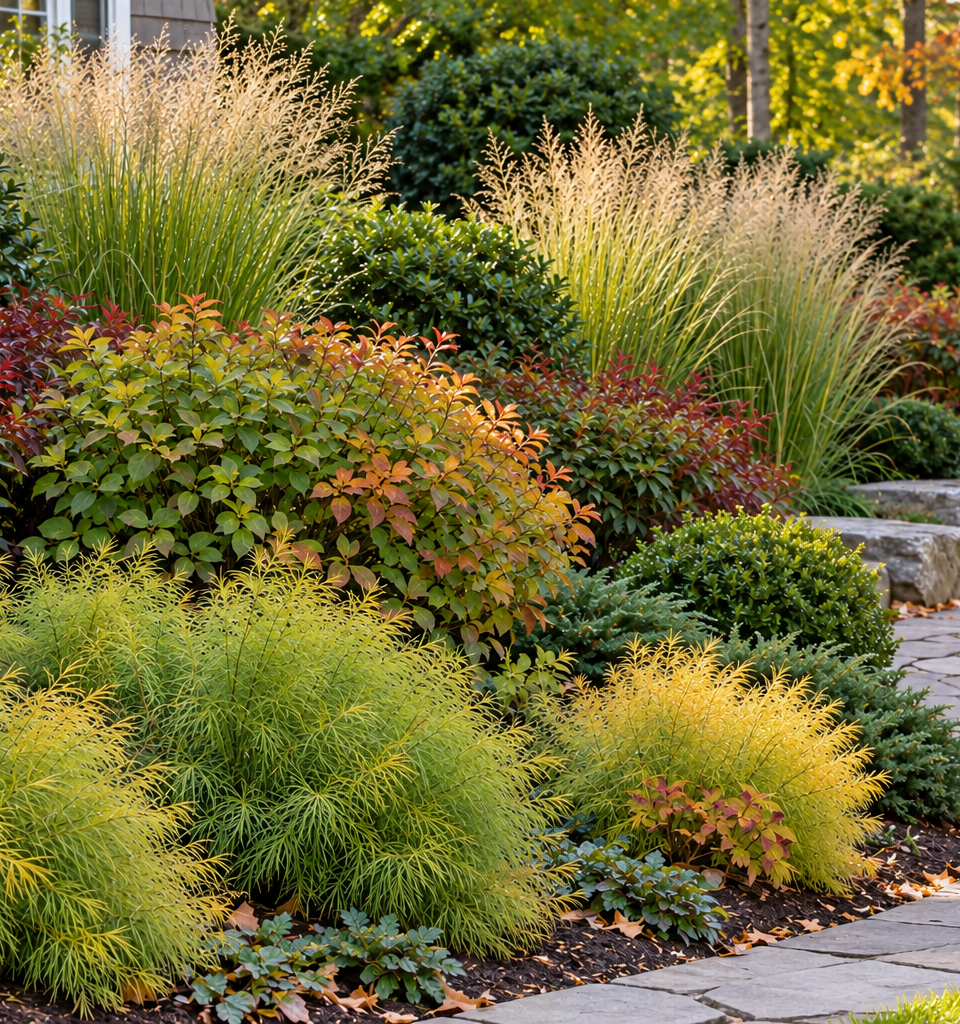
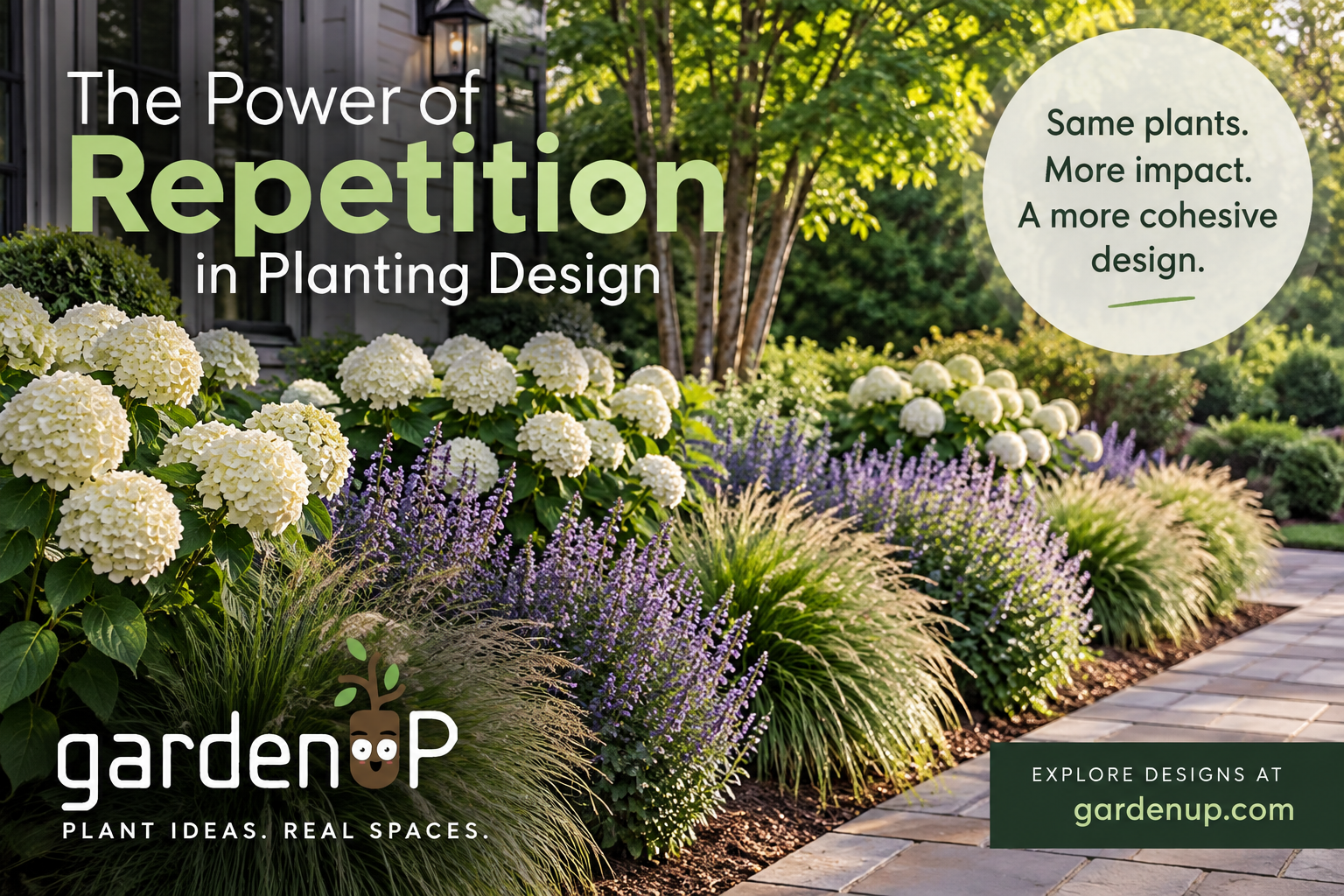
Rather than treating every section of the garden as something separate, repetition establishes connections from one area to another. A grouping of ornamental grasses might appear in several places along a border. The same flowering perennial might weave through a planting in repeating clusters. A particular foliage color or rounded shrub form might reappear at intervals throughout the design.
Those repeated elements give the eye something familiar to recognize and help the landscape feel cohesive.
Collection vs. Composition
A common temptation when choosing plants is to include as much variety as possible. There are so many beautiful choices, why not use one of everything?
The result can sometimes feel more like a collection of plants than a designed landscape.
That does not mean a planting needs to be simple or limited. A richly layered garden can include plenty of variety. The difference is that repetition provides structure within that variety.
Think of it as creating a visual vocabulary. Certain plants, colors, textures, or forms become recurring elements, while other plants provide accents and seasonal interest.
Repetition Doesn't Have to Mean Identical
Repeating the exact same plant is one approach, but repetition can happen in several ways.
A designer might repeat a particular flower color using several different plants. Similar foliage textures can appear throughout the landscape. Upright forms might be repeated to create vertical accents, while rounded shrubs provide recurring structure.
Even when individual plants change, repeating a visual characteristic can help tie the entire planting together.
Finding the Right Balance
Effective repetition is noticeable without becoming monotonous.
Too little repetition can make a planting feel disconnected. Too much can make it feel overly predictable. The goal is to establish enough recurring elements to create unity while still allowing variation, contrast, and seasonal change.
This is where thoughtful plant selection and placement become especially important. Each plant may be beautiful on its own, but its role within the overall composition matters just as much.
See the Principle in Practice with gardenUP
Repetition is one of the design principles that can be seen throughout the planting layouts in gardenUP. Instead of simply presenting a list of plants, the designs show how plants can be arranged and repeated to create rhythm, balance, and a more cohesive landscape.
For designers, garden centers, landscape contractors, and homeowners alike, exploring complete planting layouts can be a useful way to see how individual plants become part of a larger composition.
Explore the gardenUP design library and see how thoughtful repetition can help turn a group of plants into a garden that feels intentionally designed.
share this article