Red maples may get the applause each autumn, but they don’t have to carry the whole show. Some of the most interesting fall color happens closer to the ground—in shrubs, perennials, and ornamental grasses.
For a garden that feels thoughtfully designed through the changing seasons, look beyond one spectacular tree. Combine plants that bring different colors, shapes, and textures to the landscape.
Give shrubs a starring role
Shrubs bring fall color into the garden at eye level, where you can appreciate it from a window, walkway, or favorite outdoor seat.
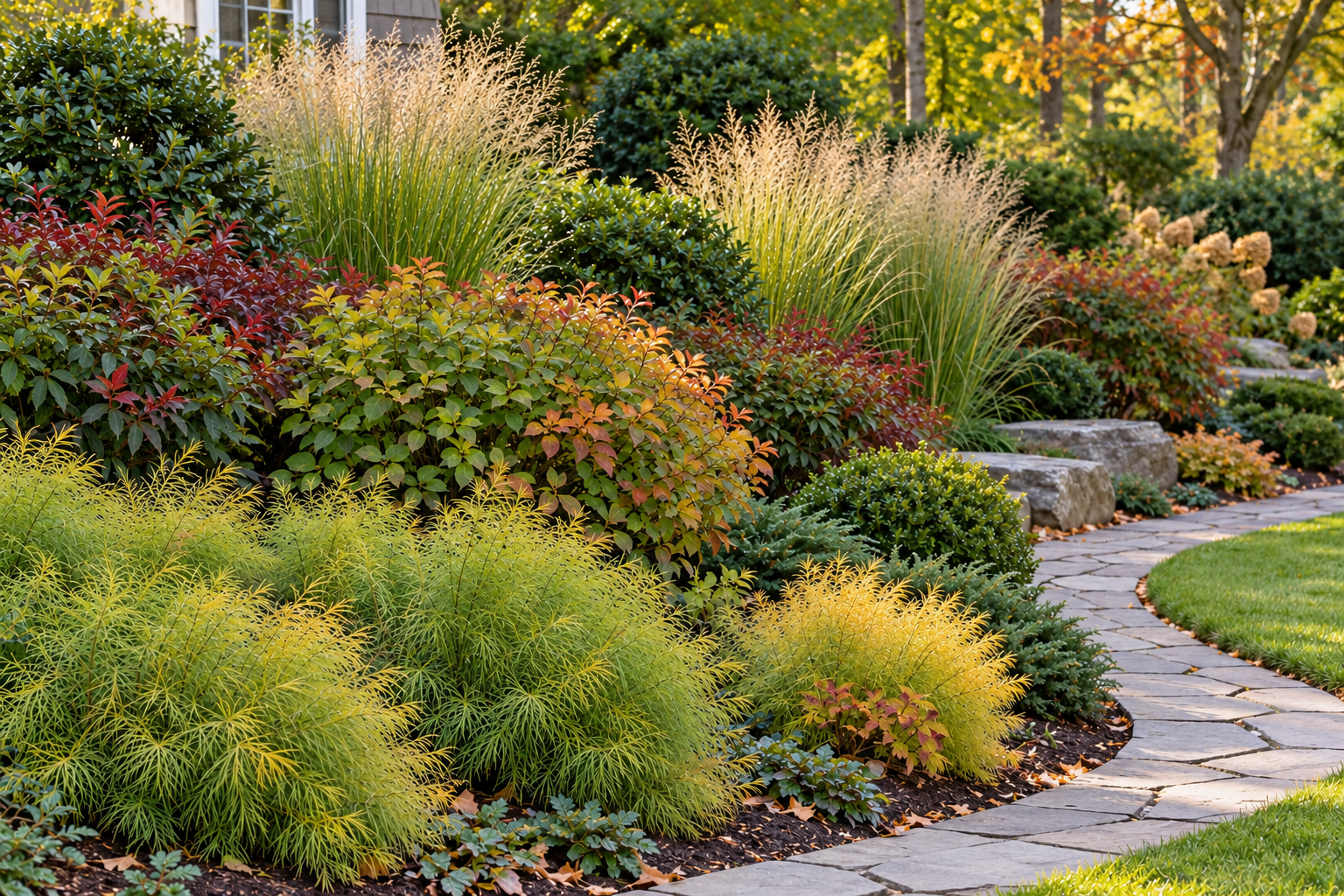
Virginia sweetspire (Itea) can provide rich red to burgundy foliage in autumn. Its rounded, leafy form makes a beautiful contrast to finer-textured plants nearby.
Fothergilla offers a different kind of display, with foliage that can turn yellow, orange, and red—sometimes with several shades appearing on the same shrub.
Both remind us that a plant’s contribution extends well beyond its flowering season.
Let perennials surprise you
We often choose perennials for their flowers, but foliage deserves a place in the decision, too.
Amsonia, or bluestar, is a wonderful example. Its autumn foliage turns yellow, and threadleaf forms create a soft, feathery effect. That golden color can become a highlight of the garden long after spring flowers have faded.
When choosing perennials, ask two questions: What does this plant look like in bloom? And what does it contribute afterward?
Add movement with ornamental grasses
Fall gardens are about more than leaf color. Movement, seed heads, and changing silhouettes help keep the landscape interesting.
Switchgrass (Panicum) brings upright form and airy flower heads. Depending on the variety, its foliage may develop yellow, reddish, or wine-colored tones before settling into softer seasonal shades.
Japanese forest grass (Hakonechloa) offers a contrasting shape, with arching foliage that spills gently along an edge. Some varieties develop golden, orange, or reddish tones as the season changes.
These grasses serve different growing conditions, so choose according to your garden’s sunlight, soil, moisture, and available space.
Give the color a backdrop
Evergreens have an important supporting role. Their steady green foliage provides contrast as surrounding plants change color, and their structure helps the garden hold its shape after deciduous leaves fall.
Picture golden Amsonia against a deep green evergreen, or warm-colored shrubs beside the upright stems of switchgrass. The contrast makes each plant easier to appreciate.
Design a combination, not just a collection
You don’t need one of everything to create a memorable fall garden.
Start with a shrub that offers seasonal color. Add a perennial or grass with a contrasting texture. Then consider whether an evergreen would help anchor the planting.
Repeat a few compatible plants to create a connected design, and allow room for their mature sizes. Fall color varies with the species, variety, weather, and growing conditions, so think of the overall combination rather than expecting every plant to peak at once.
The result is a garden with more to offer as the season unfolds.
Ready to see your garden differently? Explore gardenUP’s design library for inspiration, and make autumn interest part of your next garden plan.
share this article